24"25"26"27"28"29"30"31"32"
32 lb
Label 30 lbAdded 2 lb
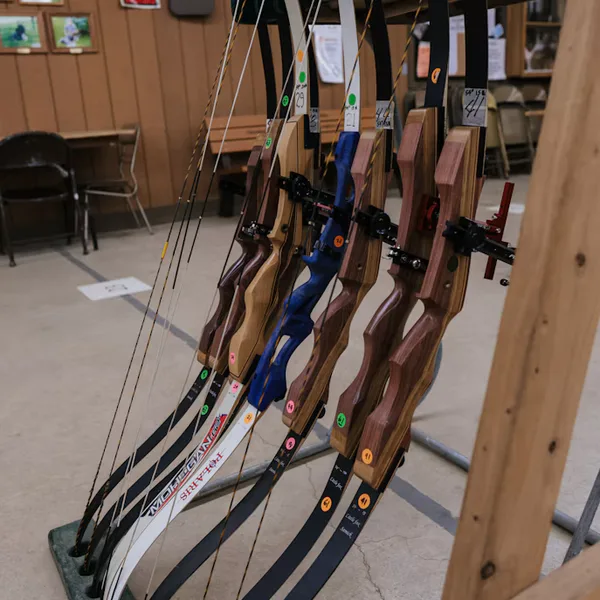
Label on the limbs30 lb
Difference+2 lb
Limbs are labeled at 28″. Draw longer or shorter and the real weight changes, and so do your arrows and how long you can shoot. Enter the weight on your limbs and your draw length to see what you actually pull. Use that number when you pick arrows.
How to use it: Find the weight printed on your lower limb (like “30# @ 28”), set it on the first slider, then set your draw length to see what you actually pull.
// The calculator
32 lb
// The math
Recurve limbs are labeled at a 28″ draw. Past 28″ you gain about 2 lb per inch; under 28″ you lose about 2 lb per inch.
So the result is label + (your draw − 28″) × 2 lb, rounded to the pound. Some bows gain a little more; a bow scale gives the exact number.
Limbs marked 30 lb @ 28″ at a 29″ draw: one inch past 28″, so 30 + 2 = 32 lb, +2 lb over the label.
The full explanation: Recurve limbs: weight, length and when to swap.
// FAQ
Quick answers about label weight, real weight and picking a starting bow.
If you can’t draw it smoothly, hold at anchor for five seconds and let down slowly, it’s too heavy. Shaking and a creeping anchor are the giveaways.
It depends on the animal and your state. Many states set a 35–45 lb minimum for deer. Check your state wildlife agency before the season.
Limbs are rated at a 28″ draw. Add about 2 lb for every inch past 28″, and subtract about 2 lb for every inch under.
// More tools
// Follow
// Free printable
Seventeen printable pages: session log, score tracker, a 30-day drill challenge, a bow maintenance card, a first-season checklist and more. Join the monthly email and it lands right away.